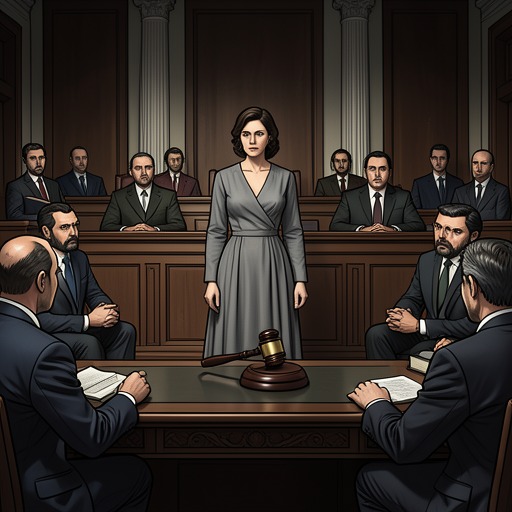
Three Mountains Motel
Where the Crawdads SingThe Three Mountains Motel, in Greenville, is the setting for the most closely examined part of Kya Clark’s alibi in the trial over Chase Andrews’s death. Kya stayed there from October 28 through October 30, 1969, and returned to her room at ten o’clock on the night Chase died. The motel’s reception counter, the clerk’s account of her movements, and the route between Greenville and Barkley Cove turn an ordinary roadside lodging into contested evidence: her presence there is established, but whether anyone could certify that she remained there all night is not.
Kya’s Stay in Greenville
Kya was staying at the Three Mountains Motel during a trip to Greenville that included dinner with her editor on October 29. The motel’s owner, Lang Furlough, testified that she had been a guest from October 28 until October 30. His confirmation placed her outside Barkley Cove for the span that included the night of the killing, giving her defense a concrete basis for an alibi.
Furlough had shown Kya to her room. In her recollection of the encounter, he lingered and kept finding reasons to remain until she opened the door in a way that indicated he should leave. At trial, however, he did not describe that conduct. Instead, he characterized her as a woman men would notice and emphasized aspects of her behavior that struck him as unusual: she did not know how to use the telephone, had walked from the bus station carrying a cardboard suitcase, and brought her own bagged dinner. The testimony thus made Kya visible through the motel proprietor’s judgment of her as well as through the basic facts of her stay.
The Clerk’s Account
Furlough was working the reception desk all night on October 29, the night Chase died. He testified that Kya returned to her room at ten o’clock after dinner with her editor and that he did not see her leave again or return during the night or early morning. Her room was directly across from the reception counter, a detail he offered to explain why he believed he would have noticed her departure.
That apparent line of sight became less conclusive under cross-examination. Eric Chastain established that Furlough had left the reception area twice to walk to his apartment, had used the restroom, and had dealt with a pizza delivery. Four guests checked in, two checked out, and he also completed the motel’s receipts account. Faced with these interruptions, Furlough conceded that Kya could have quietly crossed the street without his seeing her. He maintained the narrower point that he had not seen her leave. The distinction between not seeing a departure and being able to rule one out is the motel testimony’s central uncertainty.
The Route and the Alibi
Tom Milton’s questioning connected the motel to the prosecution’s proposed journey. According to the prosecution’s theory as he set it out in court, Kya could have left the motel late at night, walked at least twenty minutes to the bus station, taken the 11:50 p.m. bus to Barkley Cove, and arrived at about 1:40 a.m. From the bus stop, the alleged trip continued to the town wharf, by boat toward the cove near the fire tower, and on foot to the tower. The prosecution further proposed that she climbed the tower in darkness, opened its grate, encountered Chase, and retraced the journey before taking a bus back to Greenville.
Tom argued that these steps required at least one hour and seven minutes, without counting any time spent waiting for Chase. The return bus, he said, departed only fifty minutes after Kya arrived in Barkley Cove, leaving too little time for the alleged crime and the return journey. Sheriff Jackson agreed that the schedule would be tight, but suggested that Kya might have jogged between her boat and the tower or saved time along the way. The competing accounts did not dispute that the motel was her base in Greenville; they disputed whether the prosecution’s journey could fit the available hours.
A Place Made into Evidence
The motel’s role in the trial rests on a tension between presence and surveillance. Furlough could establish that Kya lodged there across the relevant dates and that he did not witness her leave after she returned from dinner. His own account of the night, however, also documented absences from the desk and enough activity to weaken the claim that he had kept continuous watch. The room’s position opposite reception sounds decisive until the interruptions are counted.
The motel therefore anchors both sides of the alibi without resolving it by itself. The prosecution used the limits of Furlough’s observation to preserve the possibility of a nighttime trip; the defense used the bus schedule and the successive distances in the proposed route to argue that such a trip could not have been completed in time. For Kya, the room across from the counter was simultaneously a place where her presence could be confirmed and a place whose witness could not guarantee that she had stayed. The trial turns this modest lodging into a measure of how much certainty can be drawn from a witness who was nearby, but not continuously attentive.